By Fiona L. Kennedy
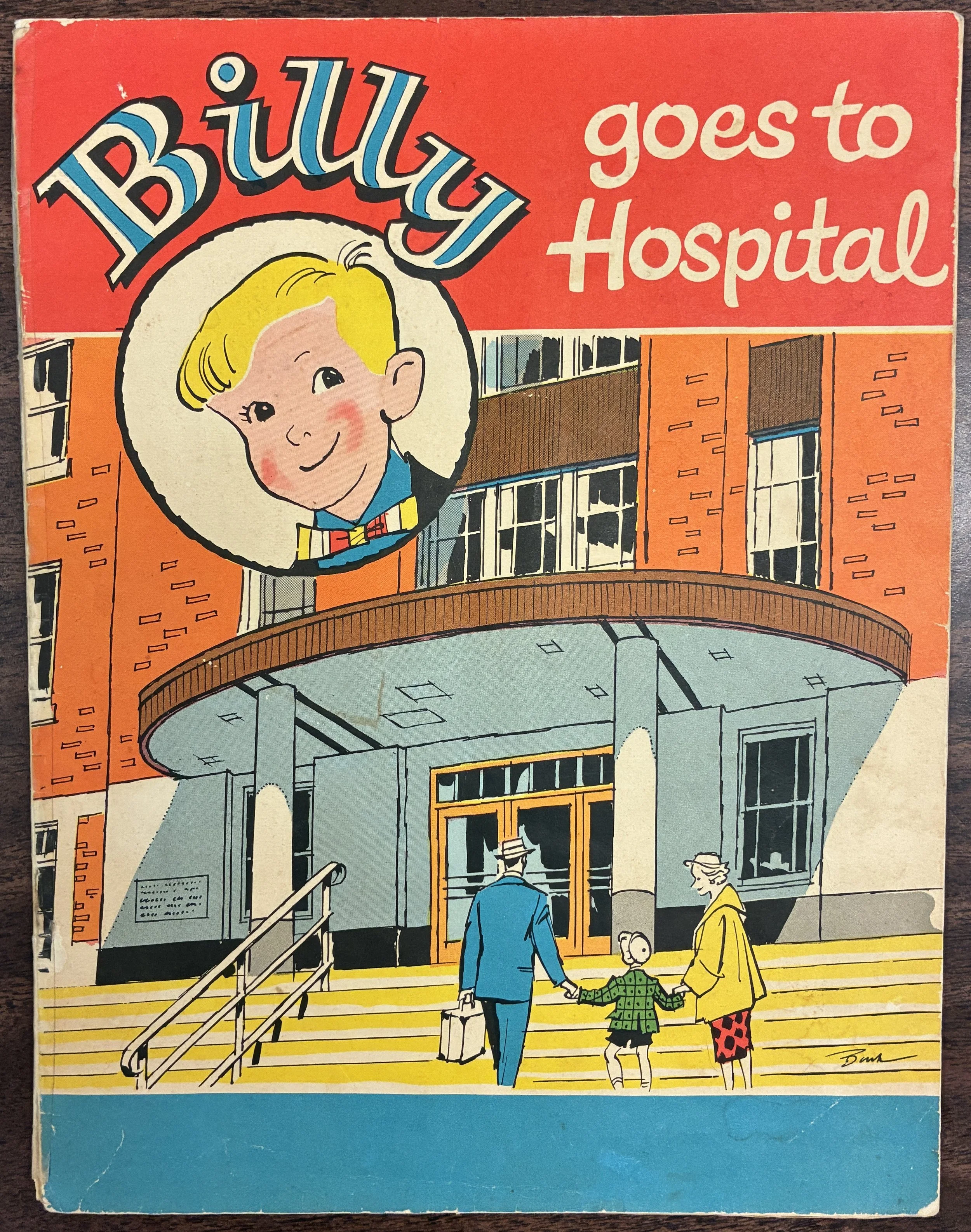
Billy Goes to Hospital colouring book, c.1965. Museum of Health Care #011002001.
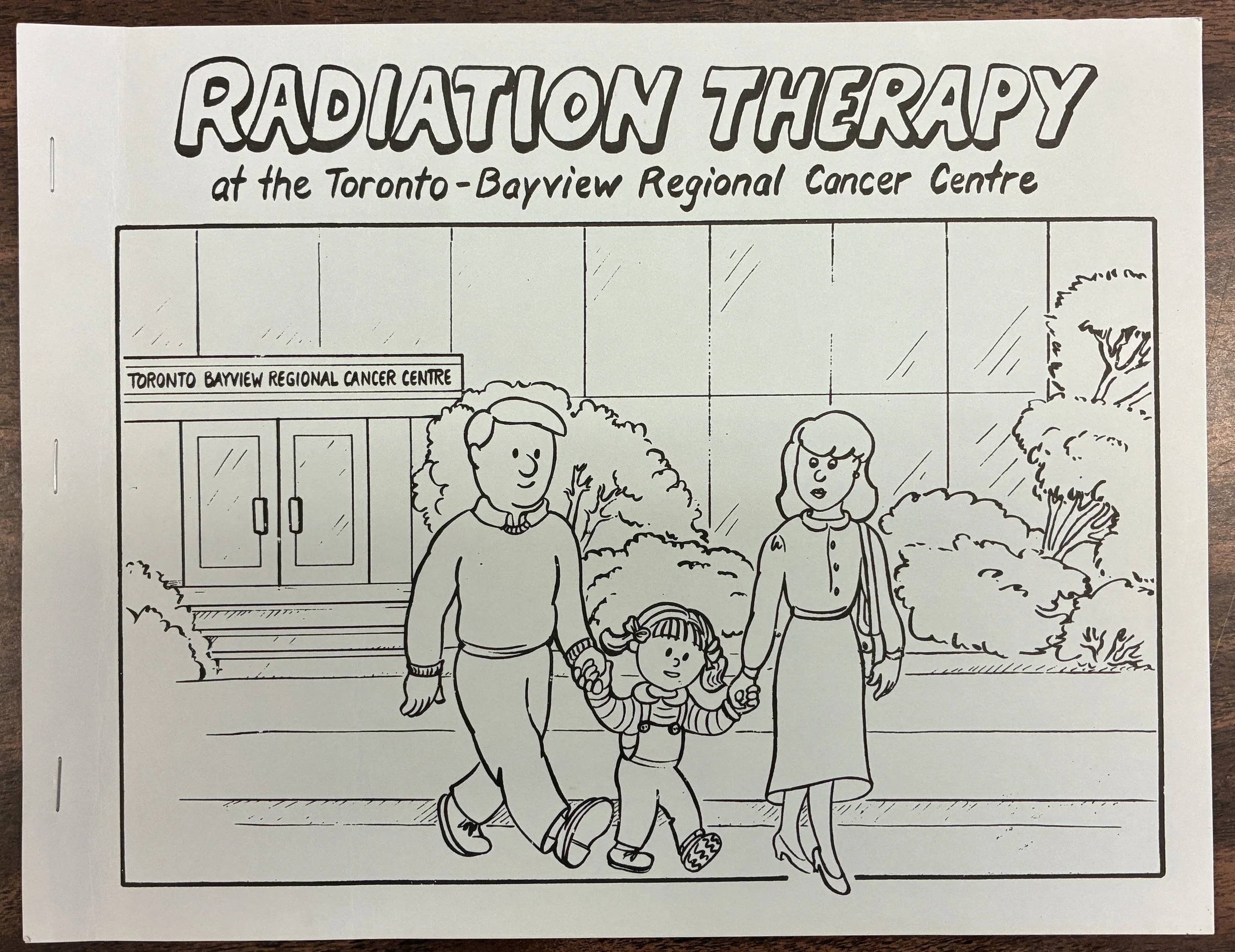
Radiation Therapy at the Toronto-Bayview Regional Cancer Centre colouring book, 1987. Museum of Health Care #1996.14.12.
These two colouring books in the Museum’s collection can seem fairly straightforward, their stories and friendly illustrations intending to make hospital stays less scary to children. But they tell us something larger about the history of children’s relationship to hospitals. Today I’m focusing on the questions: why did hospitals begin producing colouring books at all, and who was behind them? Billy Goes to Hospital was published during the 1960s or early 1970s. The second, Radiation Therapy at the Toronto-Bayview Regional Cancer Centre, was published in 1987. Now called the Odette Cancer Centre, Sunnybrook’s Toronto-Bayview Centre had opened five years before the colouring book’s publication. Both introduced children to hospital staff, equipment, spaces, and procedures, but they were produced almost twenty years apart and by different groups of people.
Children, Parents, and the Hospital
For much of the early twentieth century, children’s understanding and emotional experience of hospital stays weren’t seen as key parts of hospital care.¹ Parents of a hospitalized child faced limited visiting hours. Fear and homesickness were acknowledged but were seen as unavoidable side effects of hospitalization. This began to change after the Second World War. John Bowlby’s 1952 report Maternal Care and Mental Health emphasized the importance of children’s relationships with their mothers and other consistent caregivers.² James Robertson’s observations and films documented the distress experienced by young patients separated from their parents in hospital.³ In Britain, the 1959 Platt Report recommended more generous visiting policies, accommodation for parents, and greater attention to children’s emotional needs.⁴ These studies didn’t transform hospitals overnight, but they helped establish that hospitalization could affect children psychologically as well as physically. Keeping children calm and informed was increasingly understood as part of their care.
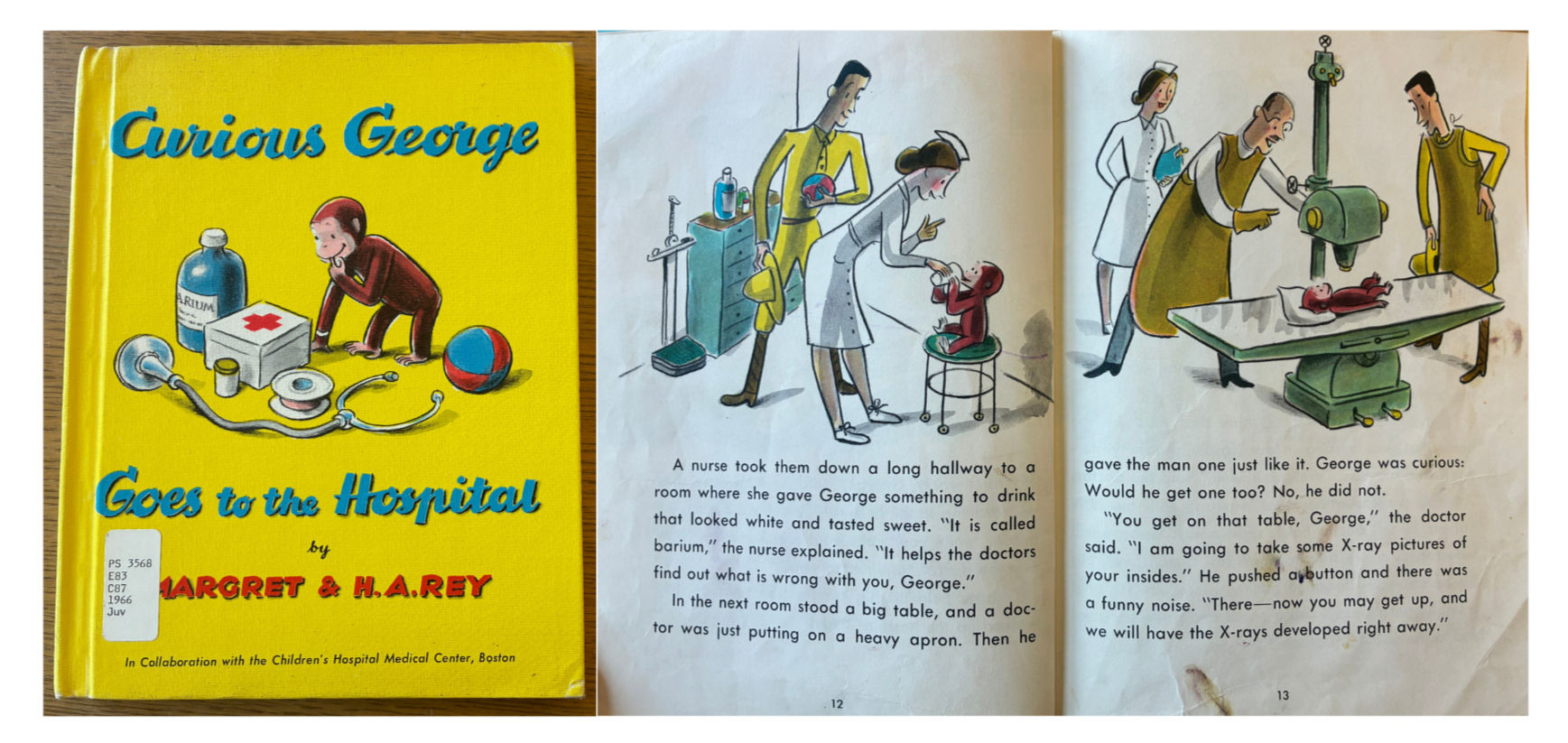
Curious George Goes to the Hospital, Margret & H.A. Rey (1966), Library and Archives Canada (301648).
Patients and families needed help understanding both procedures and the institutions in which they took place, but pamphlets designed for adults wouldn’t work for kids. Hospitals and community organizations turned to storybooks to get kids used to the hospital and its spaces. Published in 1966 in collaboration with the Children's Hospital Medical Center in Boston, Curious George Goes to the Hospital explains each step of diagnosis and treatment. Curious George goes from his family doctor to the hospital, where he receives an x-ray, is admitted, and eventually has surgery. The book explains what each member of hospital staff does and why George has to drink barium before his x-rays.
Colouring books offered an inexpensive way to translate information into play that could happen at home, in a waiting room, or in a hospital bed. In Billy Goes to Hospital, Billy visits his doctor and is told he’ll need to go to the hospital. “What kind of place is that?” he asks. His doctor replies, “a friendly kind of helping place.” The book opens with instructions addressed to parents. It explained that the book was “specially planned for younger children who are being admitted for the first time” and encouraged parents to talk with their child about hospitalization in advance, answer questions honestly, and let their child know if some experiences were likely to be painful.
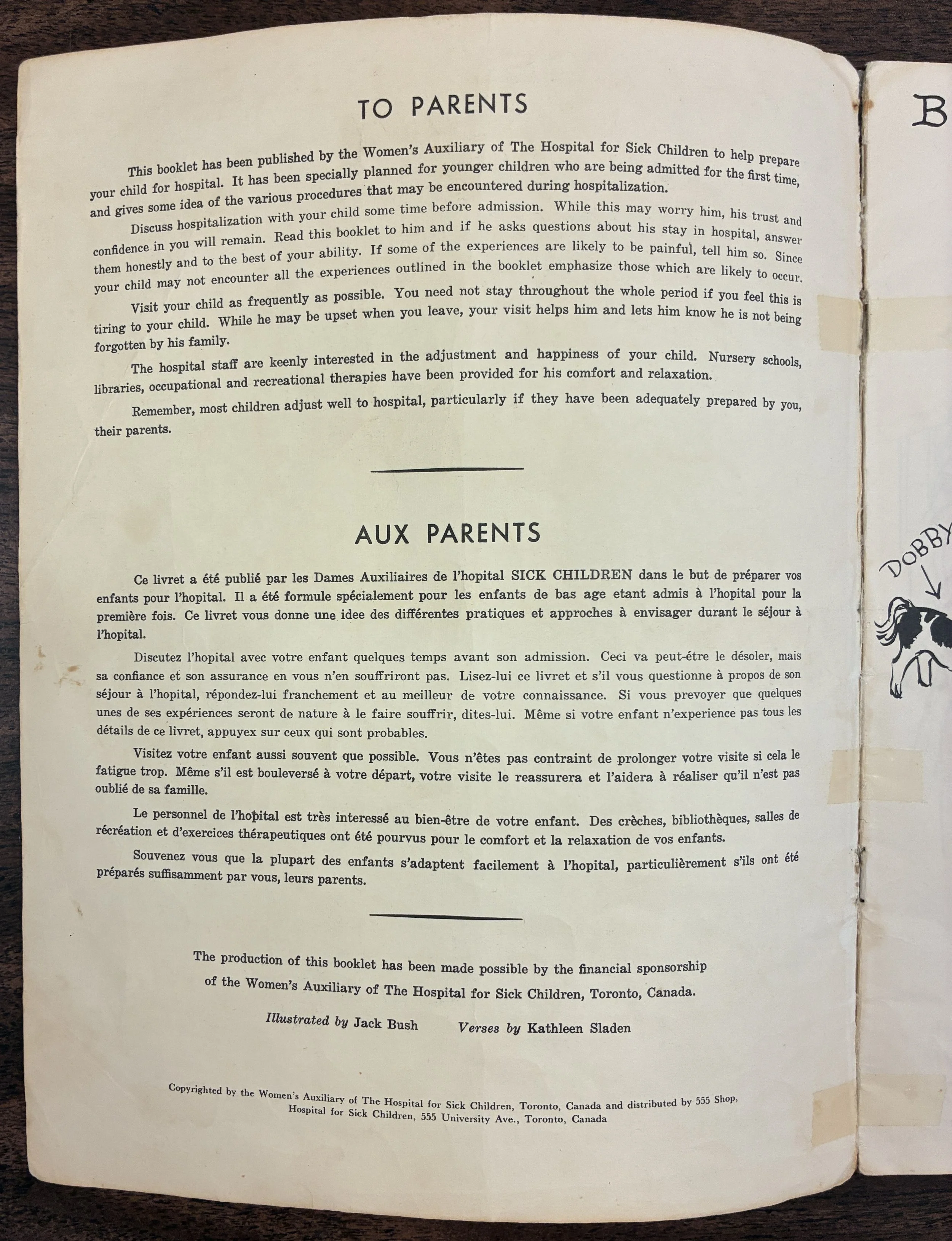
Intro note to Billy Goes to Hospital, c.1965. Museum of Health Care # 011002001.
By the late 1980s, patient education had become even more specialized. Radiation Therapy at the Toronto-Bayview Regional Cancer Centre (1987) was produced this time by an interdisciplinary group of hospital workers, including radiotherapy technologists, a paediatric radiation liaison nurse, a nurse consultant, and a medical illustrator. Instead of describing a general hospital visit, it prepared kids for one highly specific form of treatment. It explained why kids have to stay still during x-rays and reassured them that parents could still see and hear them during treatment.
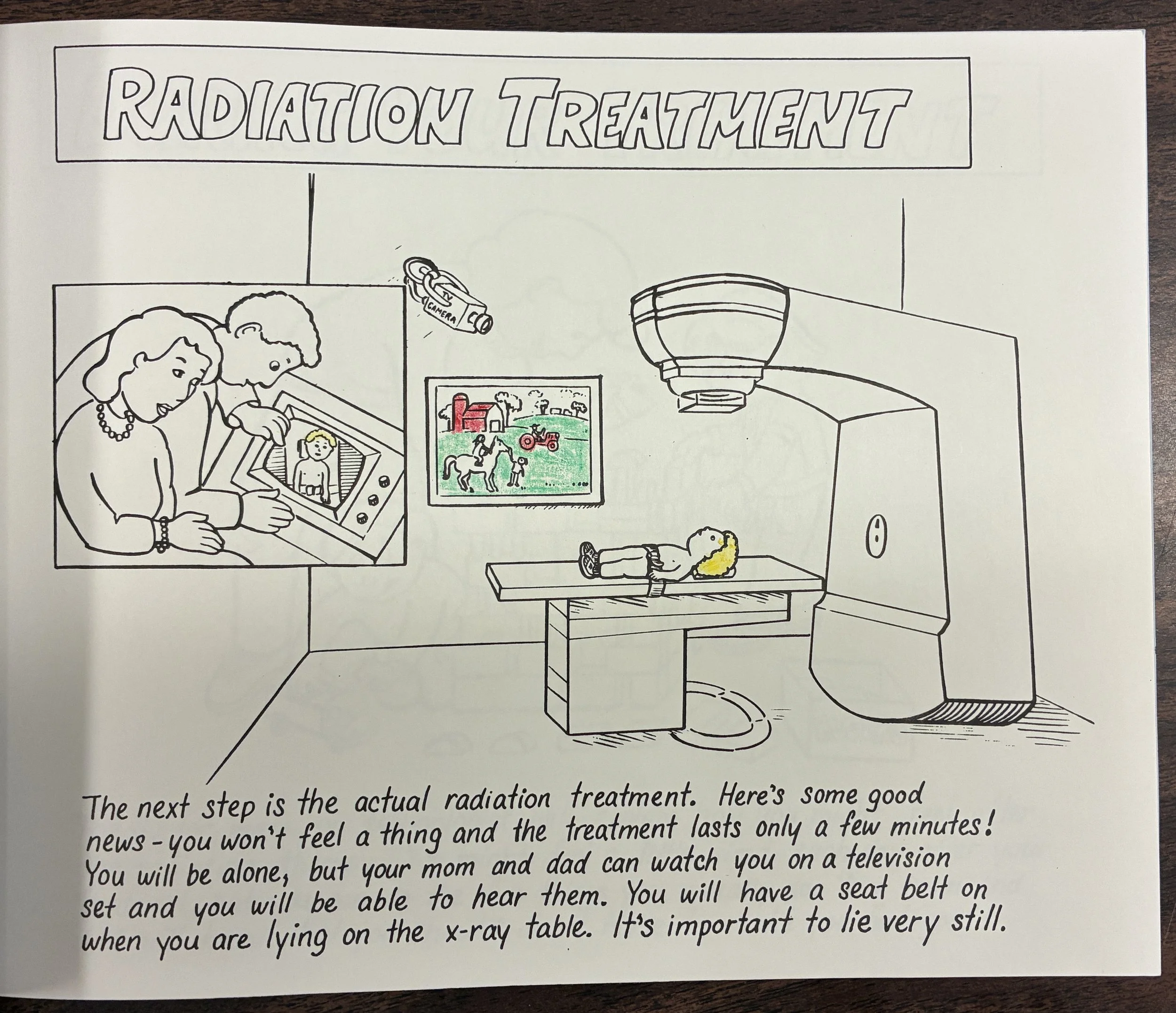
The radiation treatment page reminds kids that “your mom and dad can watch you on a television set.” Radiation Therapy at the Toronto-Bayview Regional Cancer Centre colouring book, 1987. Museum of Health Care # 1996.14.12.
Hospital space provided the structure of each story, with care framed as a sequence of places. The cover of Billy Goes to Hospital shows Billy and his parents approaching the doors of the 11-story Hospital for Sick Children, which had opened in 1951. Billy moves from the doctor’s office through a series of hospital spaces before returning home. The Toronto-Bayview booklet begins outside the cancer centre and follows the child through consultation, treatment planning, the mould room, the radiation suite, and follow-up appointments. By rehearsing this journey, the books made the hospital more legible. It made unfamiliar rooms places the child could anticipate and see as stages in a visit that would eventually end. It also uses the building’s facade as a symbol of modern hospital care.⁵
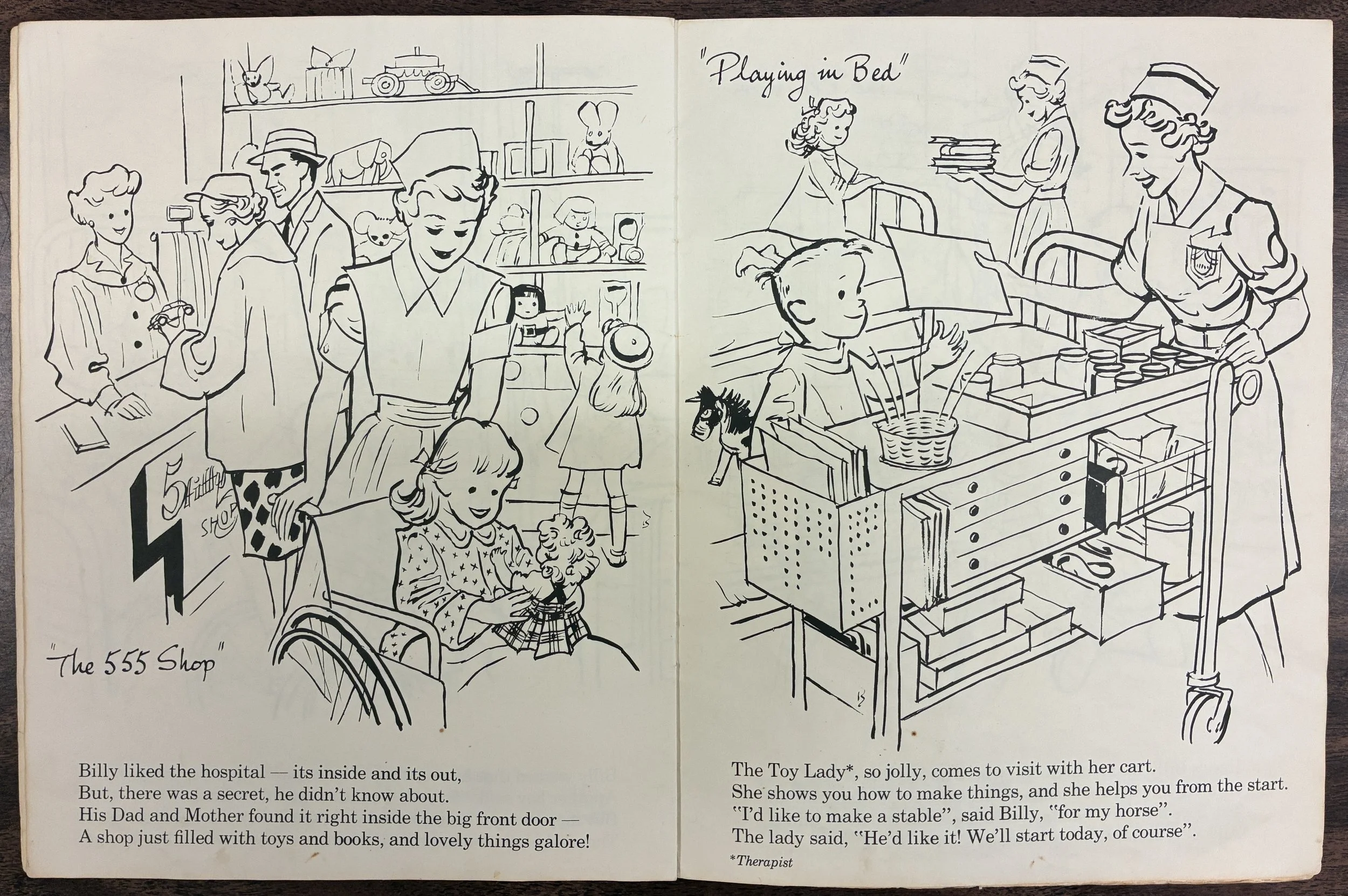
Two of the featured spaces in Billy Goes to Hospital, including the shop, run by the Women’s Auxiliary, and the ward during a visit from the Toy Lady (occupational therapist), c.1965. Museum of Health Care # 011002001.
Who Made the Books?
Billy was published and financially sponsored by the Women’s Auxiliary of The Hospital for Sick Children. The Auxiliary also held the copyright and distributed the book through the hospital’s shop (seen in the colouring book). Women’s auxiliaries had long raised money and supplied services that were not covered by hospital recreational programs, but little has been written about their role in producing educational materials for patients. For my manuscript, I plan to use the colouring book as an overlooked extension of women’s volunteer labour.⁶
The Toronto-Bayview book, however, was funded by the Toronto-Leaside Rotary Club but produced by an interdisciplinary team including two radiotherapy technologists, a radiotherapy nurse consultant, a paediatric radiation liaison nurse, and a medical illustrator. The people operating the equipment and caring for children were now also responsible for explaining it.
These publications emerged because hospitals were changing, but also because ideas about their responsibilities were changing. By the 1960s, children’s fear of hospitalization was receiving attention. Hospital staff were being asked to respond to a broader range of patient needs, and education was part of hospitals’ scope of concern—but community and volunteer organizations continued to play an important role in funding this work and making it happen. These books gave adults a way to explain the hospital and gave children something to do with that explanation.
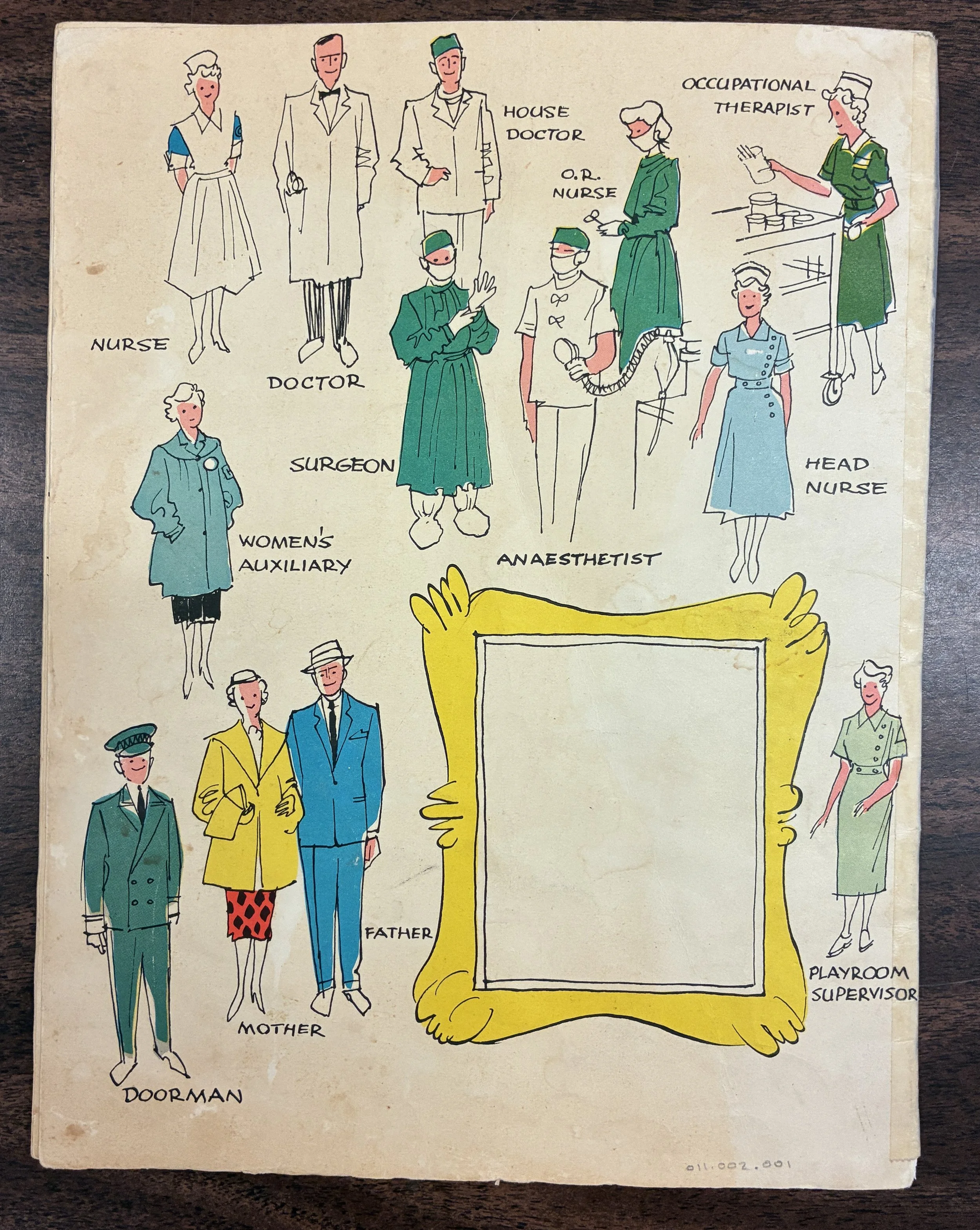
The back cover of Billy featured a cast of characters a child patient could expect to meet in hospital, c.1965. Museum of Health Care # 011002001.
Endnotes
See, for example, Judith Young, “‘A Necessary Nuisance’: Social Class and Parental Visiting Rights at Toronto’s Hospital for Sick Children, 1930-1970,” in C. David Naylor, ed., Canadian Health Care and the State: A Century of Evolution (Montreal & Kingston: McGill-Queen’s University Press, 1992), 85-103; Annmarie Adams and David Theodore, “Designing for ‘the Little Convalescents’: Children’s Hospitals in Toronto and Montreal, 1875-2006,” Canadian Bulletin of Medical History 19, no. 1 (2002): 201-243.
John Bowlby, Maternal Care and Mental Health (Geneva: World Health Organization, 1952).
James Robertson, “A Two Year Old Goes to Hospital” (1952), “Going to Hospital with Mother” (1958), Young Children in Hospital (1958), and Hospitals and Children: A Parent’s Eye View (London: Gollancz, 1962).
Sir Harry Platt, The Welfare of Children in Hospital (London: Ministry of Health, 1959).
See Adams and Theodore, “Designing for ‘the Little Convalescents,” 2002.
David Sloane has written about the contributions of women reformers to the development of children’s hospitals as more than medical institutions, focused also on comfort, protection, moral education, and a surrogate domestic environment, in “‘Not Designed Merely to Heal’: Women Reformers and the Emergence of Children’s Hospitals,” Journal of the Gilded Age and Progressive Era 4, no. 4 (October 2005): 331-354.

About the Author
Fiona L. Kenney (MARF 2026)
Fiona L. Kenney is a PhD candidate at the McGill University School of Architecture interested in the intersections between architecture, care, and ethics. She holds an MDes in History and Philosophy of Design from the Harvard GSD. Her doctoral work is supported by AMS Healthcare. As the 2026 Margaret Angus Research Fellow, Fiona will examine how children’s media shaped understandings of hospital space through simplified and participatory representations of care. Centred on medical colouring books and toys, it investigates how healthcare environments were translated into legible, structured scenes that children were invited to engage with through play.
The 2026 Margaret Angus Research Fellowship was generously sponsored by Ian M. Fraser and Janine M. Schweitzer.