Consequences of the Male Model: How Women’s Health Research has Been Undervalued in Canada’s Past and the Lasting Systemic Impacts
The term "women's health" is conceptualized and understood in a variety of ways. For the purposes of this blog, the use of the term women's health emphasizes conceptions of sex and gender in medical research and care. It refers to physical, biological, reproductive, psychological, emotional, and cultural health within the unique context exclusively, predominantly, or differently concerning women’s bodies, roles, and identities. While this paper primarily focuses on the experiences of cisgender women, this discussion transcends a sex and gender binary, understanding that individuals within gender diverse communities (intersex, Two-Spirit, transgender, non-binary, gender fluid, agender, etc...) share experiences of under representation in health care.
Introduction
Women’s health differs from men's both biologically, as a dependant of sex, and epidemiologically, as a function of societal gender roles. However, historically women’s health has been relegated and falsely equated to systems solely involved in reproduction. This classification implies the study of human biology could be reliably understood and researched using a male model. Consequently, women have been excluded from medical research in Canada’s history. As a result, women are more likely to experience a lower standard of care, delayed diagnoses, and have both fewer available and less effective treatments. This blog explores the importance of studying women’s health, the historical context of modern practices, and past and present efforts to address inequities in research, education, and care.
Sex Differences
Women’s health differs from men's as a dependant of sex. Sex chromosomes exist in the genome of every cell in the body with a nucleus, which excludes only two types of cells in blood (Dean, 2005). Furthermore, ovarian hormones bind to receptors throughout the body and brain including fundamental metabolic signals (Rettberg, 2014).
Many disorders differ in prevalence and presentation in females and males. For example, females are more susceptible to some cardiac conditions including congenital heart defects, scleroderma, and pulmonary hypotension, (Archer, 2025). Dr. Peter Goadsby, a neurologist in headache disorders, found that after the onset of puberty, women experience three times as many migraines compared to men. (Zafar, 2025) When migraines typically decline after menopause, a decrease in protective estrogen production increases the risk of Alzheimer's with women representing over two thirds of cases. “Despite these known differences [in neural conditions], the Women’s Health Research Cluster found that 3% of over 3000 neuroscience and psychiatry studies considered women’s health variables questions.” (Gravelsins et al., 2024). Limited research extrapolates to less effective treatment. For example, a liver enzyme that clears certain drugs more slowly in females was found to cause higher drug concentrations in their systems, potentially altering the effectiveness and side effects of some antidepressants and painkillers (Jacobson, 2014).
Gendered Influences: Gynecology ≠ Women's Health:
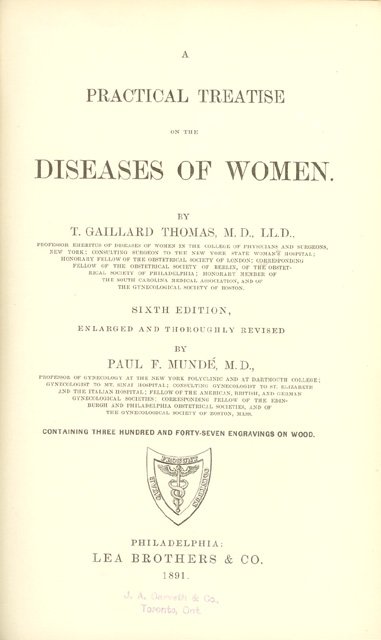
Socially, the experiences of women also vary from men due to societal norms, patriarchal values, and a gendered framework. Gendered expectations can shape tendencies. For example, mothers are expected to prioritize their families over themselves (Engo, 2025). One large study found that for over 900 disorders, women are diagnosed an average of 3.7 years later than men. (Westergaard et al., 2019) These researchers note most of these sex-linked incongruencies are “not linked directly to anatomical or genomic differences”, pointing to social and systemic factors (Westergaard et al., 2019). Inherently, the delay of diagnosis prolongs the start of treatment and results in worse health outcomes. Furthermore, historical and contemporary sources demonstrate how women’s health has long been narrowly confined to a reproductive lens. For example, an 1891 gynecology textbook titled A Practical Treatise on the Diseases of Women, held in the Museum of Health Care’s collection, focuses almost exclusively on reproductive systems, reflecting a medical tradition that equated women’s health with fertility (ID: 997037133). This reductive framing persists in more recent materials as well. A 2002 McGraw-Hill medical textbook defines gynecology as “the specialty of health care that addresses the physiology and pathology of nonpregnant females,” reinforcing the false notion that women’s health is exceptional only when pregnant.
“A Practical Treatise on the Diseases of Women“ from The Museum of Health Care, 997037133.

Anatomical teaching tools from earlier decades show how societal norms shaped scientific representations; for instance, a 1946 Marjorie Winslow anatomical teaching model of the “normal woman” features painted red lips and omits pubic hair entirely. This supports an idealized version of female anatomy rather than an accurate biological reference. (Museum of Health Care, ID: 996003128). From care models to educational content, social biases play an influential role in shaping our approach to women’s health.
Anatomical Model of a “Normal Woman” from the Museum of Health Care, 996003128.
The Typical A-Typical Heart Attack- Barriers in Care
Most medical knowledge in Canada is founded upon a male data model and the experiences of men. This deeply embedded criteria ostracizes disease in women, often labelling presentation in women as ‘a-typical’ (Halbreich and Kahn, 2006). Consequently, “health burdens for women are systematically underestimated, with datasets that exclude or undervalue important conditions.” (Perez and Shyam, 2024).
Exclusion from research limits physicians’ understanding and can facilitate women’s health dismissal. For example, in contrast to men’s classic heart attack symptoms like chest pain and numbness in the left arm, women’s symptoms often appear as “neck, jaw, or upper stomach pain, nausea or vomiting, and shortness of breath.” (Pruthi, 2024). Premenopausal women are also less likely to experience a cardiovascular disease making a missed diagnosis more likely (Archer, 2025). Furthermore, a 2016 study from the University of Leeds shows that following a heart attack, women are 50% more likely to receive an incorrect initial diagnosis.
The issue persists from diagnosis to treatment. A 2005 study found aspirin had no effect on heart attack outcomes in women (Ridker et al., 2005). The solution is plain: “...drug outcomes must be thoroughly evaluated in both sexes so that comprehensive information about safety, and effectiveness can be made publically available.” (Yackerson, 2019). Whether it is physiological, technological, or pharmaceutical research, knowledge is power. Addressing sex and gender disparities in research is essential to bridging this gap in women’s health care.
History of Exclusion from Trials
Medical research predating major ethics standards often exploited predominantly male, vulnerable control groups such as prisoners and military cohorts. Later, the popularized rationale for female exclusion from clinical trials was rooted in concerns that variable female hormone cycles and pregnancy would confound results (Zafar, 2025). In the mid-nineteenth century, support for exclusion was catalyzed when adverse side effects to prenatal prescriptions raised concerns for fetal health. Major recalls include the use of DES in 1938 and Thalidomide in 1959-62 in Canada.
In response to teratogenic concerns, the U.S. Food and Drug Administration implemented an exclusion policy in 1977 titled ‘General Considerations for the Clinical Evaluation of Drugs,’ banning all women from puberty to menopause from phase 1 research in an effort to avoid inadvertent fetal harm. This policy soon extended to all phases of clinical trials (Lippman, 2006). While there were no formal Canadian guidelines, Canadian practices often mirrored U.S. regulatory conventions, and this was no exception.
It was in the 1990s that growing awareness of sex and gender disparities in health and international influence prompted the support for women in Canadian clinical trials. Scientific advances revealed key sex differences in drug metabolism and disease progression, emphasizing the need to include women for safer, more effective treatments (Yackerson, 2019). Additionally, adherence to international ethics guidelines, including the Declaration of Helsinki (World Medical Association, 2025), pressured Health Canada to revise exclusionary policies. In 1996/7 guidelines released by Health Canada advocated for the inclusion of female participants in all phases of clinical trials including a prompt to consider the use of hormonal contraceptives. However, this was only advised and not enforced. (Lippman, 2006).
Pivotally, in 1999 the Women’s Health Strategy was introduced by Health Canada following a 1995 United Nations Conference on Women; an initiative solidified by the introduction of Gender-Based Analysis (GBA) in 2000, an analytical approach “... supporting the consideration of [women] in policies, programs and legislation.” (House of Commons of Canada, 2005). This later evolved to become Sex and Gender Based Analysis (SGBA) which the Women’s Health Research Cluster (2025) describes as a federally integrated, “framework that examines how biological differences (sex) and social factors (gender) influence health outcomes.” SGBA can be effectively applied at any level in the development and restructuring of policy, services, infrastructure, and initiatives. From 2009-2016, SGBA Plus, which further includes the intersectionality of other identity factors, was implemented across Canada’s Health Portfolio. Institutions in this portfolio include Health Canada, the Public Health Agency (PHA), the Canadian Institute of Health Research (CIHR) and the Canadian Food Inspection Agency (CFIA). PHA of Canada began to integrate SBGA Plus in 2009 while the CIHR introduced Sex and Gender Based Considerations for any grant application the year after (CIHR, 2018). The Canadian Food Inspection Agency was added to the Health Portfolio in 2015 and thus to SGBA policy at the same time (Health Canada, 2017).
A 2025 Queens University Researcher, Dr. Stephen Archer, describes present day protocols for women’s health research, “Now 100% of proposals talk about sex, and 95% are looking at studying both sexes individually.” From total omission to mandated consideration, the journey of equity in health and clinical research spans decades and continues to evolve.
Gaps in Existing Policy: Research in Women for Women
While great progress has been made towards equity in women’s health research, it is essential to address persistent gaps. Funding is a critical obstacle to furthering women’s health research. In 2024, the World Economic Forum presented a financial argument for the sustained gap in women’s health: “Lower investment in women’s health conditions relative to their prevalence […] drives a reinforcing cycle of weaker scientific understanding about women’s bodies and limited data to de-risk new investment.” In other words, there exists a positive feedback loop where limited data detracts new research funding.
Dr. Stephen Archer shares that while the Canadian Institute of Health Research expresses preference for sex stratified research, they can not financially compensate for the inclusion of a nearly doubled experiment. Without sufficient funding, there often aren’t enough samples to make statistically significant conclusions for both sexes. For example, although Archer observed different ranges of pulmonary artery pressures in his male and female rats with pulmonary hypertension, he will likely amalgamate the groups for lack of funding. This means although women are now involved in trials, barriers still exist to studying distinctly women’s health as we have men’s health for centuries.
Secondly, one must consider the climate of women-centric research. A group from the Women’s Health Research Cluster found that in 2023 less than six per cent of Canadian health research funding and 4.4% of grants went toward women's health. In her team’s 2024 call to action to the House of Commons Canadian Researcher, Gravelsins, shares her frustration in seeking support for women directed research, “Many of my colleagues, including myself, have received the feedback to “add males” on CIHR grants that study pregnancy, the placenta, or female-specific cancers. It’s now time to prioritize research in women for women.” To achieve equity in health research, funding bodies are called to move beyond mere inclusion and actively prioritize studies that centre women’s unique health needs.
Women’s Health in Medical Education Curricula:
The continued use of outdated curricula in medical schools perpetuates barriers to effective women’s health care. The Women’s Health Cluster calls for women’s health training to be integrated into medical school and graduate programs to facilitate discovery. Some evident oversights have been corrected in recent history including Cambridge University’s addition of breasts to their medical schools anatomy books in 2016 (Neville, 2024). Allison Engo, founder of the Women’s Health Awareness Movement (WHAM) and current McGill University medical student, suggests some physiological differences have yet to be thoroughly stratified, sharing, “I remember having one 50 minute lecture about women’s heart health integrated into our curriculum — and this is a great start to the conversation — but unfortunately, we never spoke about any other sex or gender differences in the context of the liver, pharmaceutical metabolism or neurological conditions.”
Advocating for educational change is a continuous process. This year, WHAM was able to prompt the inclusion of content discussing abortion rights and women’s autonomy bringing socio-political influences of women’s health into discussion. (Engo, 2025). While initiatives like WHAM represent important progress, the persistence of significant gaps in medical education highlights the continued need for the systematic integration of women’s health to achieve comprehensive and evidence-based care.
Women as Health Care Professionals:
Representation of women and gender-diverse professionals in health care is imperative because diverse care teams more effectively reflect and respond to the needs of diverse patient populations (DePape, 2025). Historically, women have faced significant barriers to medical training, such as outdated beliefs that women were too weak or morally unfit for roles as physicians or surgeons (Birckle & Tally, 2015). Within Kingston’s history, women attending Queen’s University Medical School in the early 1880’s were met with protests from male students and professors which escalated to a 50 year long ban on women’s enrollment. The absence of these voices and perspectives in healthcare have enabled the gaps that exist today.
These gender biases persist. For example, women comprise about one-third of surgeons in Canada (Schneidman et al., 2025). Dr. Jillian Schneidman’s recent study highlights structural and cultural obstacles including ill-fitting surgical tools, pay disparities, and lowered respect from patients and staff (Schneidman et al., 2025). According to Dr. Stephen Archer, former Head of Medicine at Kingston Health Sciences Center, policies such as supportive maternity leave and diversifying hiring committees are crucial steps towards reducing unconscious biases and fostering inclusive environments.
Speaking Up - Awareness and Autonomy

Current advocacy groups work passionately to raise awareness and engender change in women’s health. One example is the Women’s Health Awareness Movement (WHAM), a group of motivated medical students at McGill University from various backgrounds, like nursing and occupational therapy, who are dedicated to advocating for the health of women and gender diverse individuals. WHAM’s founder, Allison Engo, was inspired by her own experience growing up with a mother who suffered from undiagnosed endometriosis, a condition that affects 1 in 10 women (WHO, 2023). Witnessing her mother’s severe symptoms, Engo often wondered whether she or her future children would experience the same pain. In response, Ms. Engo has taken meaningful action and established partnerships with hospital based organizations and passionate physicians to raise awareness about female specific diseases and preventative women’s health. In a photo shared from a June fundraising event, WHAM announced they raised $19,000 in fundraising for breast cancer research (WHAM Initiative, 2025). National shifts start with dedicated people.
Good for Everyone
Advancing women’s and gender-diverse health research is a matter of equity that benefits all of society. A 2024 report by the World Economic Forum and McKinsey Health Institute highlights the broad societal and economic impacts of improving women’s health, including progression in education, intergenerational benefits, and increased workforce participation.
Scientific discoveries in women’s health can also lead to breakthroughs that extend beyond gender-specific care. For example, multiple sclerosis (MS) often goes into remission during late-stage pregnancy. Understanding the mechanisms behind this could inform treatment for all individuals living with MS, regardless of sex (Gravelsins et al., 2024). Furthermore, many women’s health conditions show disproportionately higher prevalence in Indigenous and Black communities (Coen-Sanchez, 2022). Investing in this research can help address the social determinants of health that exacerbate disparities in these populations. Ultimately, improving women’s health is more than a niche concern but instead a pathway to improving public health outcomes for all.
Conclusion
The women's health gap is embedded within the fabric of the health care system in Canada. As Dr. Archer said, “We can’t expect to get beyond hundreds of years of maltreatment in a decade.” It is important that we recognize the inequalities perpetuated by our patriarchal history and work diligently to seek equity. While great strides have been made towards the stratification of women's health, evidence shows that there is still work to be done.
This blog has explored just some of these strategies. From rewriting policy, to funding infrastructure, to sparking discussions, closing the women’s health gap will require ongoing commitment, collaboration, and accountability. The strategies outlined here suggest essential steps forward, but sustained effort is necessary to ensure that equity in women’s health becomes standard practice.
Endnotes
[1] This pertains to human challenge studies, or the intentional infection of human subjects for research often without sufficient informed consent. (Williams and Fisher, 2018).
[2] Diethylstilbestrol (DES) was prescribed to prevent miscarriages and was found 30 years later to cause vaginal cancer and reduced fertility. (Ridker et al., 2005).
[3] Thalidomide was intended to prevent morning sickness and caused severely malformed limbs and damage to peripheral nerves (Pauker, 2002)and has affected 135-200 children in Canada (Lippman, 2006).
[4] A 2015 American Journal on nineteenth century women in health care roles describes women’s access to medical training as, “barred on account of gender with often the arguments of women as the weaker sex, being unable to manage the work of a physician or even a surgeon. Moreover, it was considered to be immoral for women to attend dissections, let alone to see a naked male body even if dead.”
References
Archer, Dr. S. (2025, August). Women’s Cardiac Health Discussion [Virtual Interview].
A Practical Treatise on the Diseases of Women. 1891. Accession No. 997037133. Museum of Health Care, Retrieved August 6th, 2025, from https://mhc.andornot.net/en/list?q=997037133&p=1&ps=20
Balch, B. (2024, March 26). Why we know so little about women’s health. AAMC. https://www.aamc.org/news/why-we-know-so-little-about-women-s-health
Birkle, C., & Tally, J. (2015). Introduction: Waging health: women in nineteenth-century american wars. European journal of American studies, 10(1). https://doi.org/10.4000/ejas.10665
Committee report no. 2—Fewo (38-1)—House of commons of canada. (2005, April). https://www.ourcommons.ca/documentviewer/en/38-1/FEWO/report-2/page-99?utm_source=chatgpt.com
Coen-Sanchez, K., Idriss-Wheeler, D., Bancroft, X., El-Mowafi, I. M., Yalahow, A., Etowa, J., & Yaya, S. (2022). Reproductive justice in patient care: Tackling systemic racism and health inequities in sexual and reproductive health and rights in Canada. Reproductive Health, 19(1), 44. https://doi.org/10.1186/s12978-022-01328-7
Conley, J. M., & Richards, S. M. (2008). Teratogenesis—Overview of Encyclopedia of Ecology. https://www.sciencedirect.com/topics/earth-and-planetary-sciences/teratogenesis
Dean, L. (2005). Blood and the cells it contains. In Blood Groups and Red Cell Antigens [Internet]. National Center for Biotechnology Information (US). https://www.ncbi.nlm.nih.gov/books/NBK2263/
DePape, keila. (2025, July 10). Gender bias holds back female surgeons, study finds. Newsroom. https://www.mcgill.ca/newsroom/channels/news/gender-bias-holds-back-female-surgeons-study-finds-365999
Engo, A. (2025, July). Women’s Health Awareness Movement [Virtual Interview].
Government of Canada, C. I. of H. R. (2018a, February 12). How CIHR is supporting the integration of SGBA - CIHR. https://cihr-irsc.gc.ca/e/50837.html
Government of Canada, C. I. of H. R. (2018b, October 15). Sgba+ health policy-research partnerships—Cihr. https://www.irsc.gc.ca/e/51192.html?utm_source=chatgpt.com
Government of Canada, C. I. of H. R. (2022, July 5). National women’s health research initiative—Cihr. https://cihr-irsc.gc.ca/e/53095.html
Government of Canada, C. I. of H. R. (2024, June 13). Research priority plan 2024-2029 - strengths to solutions: Advancing sex and gender science for healthy futures - cihr. https://www.cihr.gc.ca/e/35752.html?utm_source=chatgpt.com
Government Of Canada, S. C. (2025, March 5). Top 10 leading causes of death, Canada, 2023. https://www150.statcan.gc.ca/n1/daily-quotidien/250305/t001a-eng.htm
Gravelsins, L., Splinter, T., & Galea, L. (2024, April 29). Prioritizing women’s health research will improve health for all. Women’s Health Research Cluster / Womenmind. https://www.ourcommons.ca/Content/Committee/441/HESA/Brief/BR13091309/br-external/CentreForAddictionAndMentalHealth-e.pdf
Halbreich, U., & Kahn, L. S. (2007). Atypical depression, somatic depression and anxious depression in women: Are they gender-preferred phenotypes? Journal of Affective Disorders, 102(1–3), 245–258. https://doi.org/10.1016/j.jad.2006.09.023
Health Canada. (2017, June 29). Health portfolio sex and gender-based analysis policy [Policies]. https://www.canada.ca/en/health-canada/corporate/transparency/heath-portfolio-sex-gender-based-analysis-policy.html
Houghton Mifflin , C. (2024). American heritage medical dictionary. Houghton Mifflin Company.
Jacobson, R. (2014, July 1). Psychotropic drugs affect men and women differently. Scientific American. https://www.scientificamerican.com/article/psychotropic-drugs-affect-men-and-women-differently/
Leeds, U. of. (2016, August 30). Heart attacks in women more likely to be missed. https://www.leeds.ac.uk/news-health/news/article/3905/heart-attacks-in-women-more-likely-to-be-missed
Lippman, A. (2006, March). The Inclusion of Women in Clinical Trials: Are We Asking the Right Questions? . Women and Health Protection. https://whp-apsf.ca/pdf/clinicalTrialsEN.pdf
Neville, S. (2024, August 2). How medical research is failing women. Financial Times.
Normal Woman [anatomical model]. 1946. Accession No. 996003128. Museum of Health Care, Retrieved August 6th, 2025, from 996003128 found 1 record • Museum of Health Care at Kingston
Pauker, S. E. (2002). From protectionism to access: Women & participation in clinical trials - conflict, controversy, and change. http://nrs.harvard.edu/urn-3:HUL.InstRepos:8889449
Pérez, L., & Bishen, S. (2024). Closing the gender health gap is a $1 trillion opportunity to improve lives and economies. World Economic Forum. https://doi.org/10.1038/d43747-024-00021-x
Pruthi, S. (n.d.). How heart disease is different for women. Mayo Clinic. Retrieved July 16, 2025, from https://www.mayoclinic.org/diseases-conditions/heart-disease/in-depth/heart-disease/art-20046167
Rettberg, J. R., Yao, J., & Brinton, R. D. (2014). Estrogen: A master regulator of bioenergetic systems in the brain and body. Frontiers in Neuroendocrinology, 35(1), 8–30. https://doi.org/10.1016/j.yfrne.2013.08.001
Ridker, P. M., Cook, N. R., Lee, I.-M., Gordon, D., Gaziano, J. M., Manson, J. E., Hennekens, C. H., & Buring, J. E. (2005). A randomized trial of low-dose aspirin in the primary prevention of cardiovascular disease in women. New England Journal of Medicine, 352(13), 1293–1304. https://doi.org/10.1056/NEJMoa050613
Saunders. (2003). Miller-keane encyclopedia and dictionary of medicine: Vol. Seventh Edition. Elsevier, Inc.
Schneidman, J., Rice, K., & Armstrong, N. (2025). Women in surgery: The social construction of gender in surgical practice. The American Journal of Surgery, 116343. https://doi.org/10.1016/j.amjsurg.2025.116343
Segen, J. C. (2006). Concise dictionary of modern medicine. McGraw-Hill.
Sex and gender based analysis. (2025). Women’s Health Research Cluster. https://womenshealthresearchcluster.com/professional-development/sex-and-gender-based-analysis/
Taber, C. W. (1937). Taber’s cyclopedic medical dictionary. F.A. Davis.
Westergaard, D., Moseley, P., Sørup, F. K. H., Baldi, P., & Brunak, S. (2019). Population-wide analysis of differences in disease progression patterns in men and women. Nature Communications, 10(1), 666. https://doi.org/10.1038/s41467-019-08475-9
Williams, Q., & Fisher, J. A. (2018). Captive to the clinic: Phase i clinical trials as temporal total institutions. Sociological Inquiry, 88(4), 724–748. https://doi.org/10.1111/soin.12228
WHAM Initiative. (2025, July 6) [Photo of a large group smiling at a fundraising WHAM event] [Photograph] Instagram. https://www.instagram.com/p/DLyWFpwMf_5/?img_index=6&igsh=MWt6b2p6dTEzc24zcg==
WHO - Endometriosis. (2023, March 24). World Health Organization. https://www.who.int/news-room/fact-sheets/detail/endometriosis
Wma—The world medical association-wma declaration of helsinki – ethical principles for medical research involving human participants. (2025, April). https://www.wma.net/policies-post/wma-declaration-of-helsinki/
Yakerson, A. (2019a). Women in clinical trials: A review of policy development and health equity in the Canadian context. International Journal for Equity in Health, 18(1), 56. https://doi.org/10.1186/s12939-019-0954-x
Yakerson, A. (2019b). Women in clinical trials: A review of policy development and health equity in the Canadian context. International Journal for Equity in Health, 18, 56. https://doi.org/10.1186/s12939-019-0954-x
Zafar, A. (2025, May 10). Why doctors and researchers say Canada needs to change course on women's health studies. CBC News. https://www.cbc.ca/news/health/women-health-second-opinion-1.7531876
Dr. Stephen Archer MD Virtual Interview Notes
By Kate McKinley, August 1st, 2025
Q: A typical woman's heart attack presentation in women is making its way to mainstream knowledge, what common misconceptions do you wish people understood about women’s cardiac health or function?
A: Some are interesting facts but people don’t always like the facts, and they change over time. Women live 5-7 years longer than men, it would be interesting if women were. even though evolution understands —--- (female death is a big cause) why we have focused on men’s cardiac death .
When it comes to women, people like to flag it as a human rights debate, but for pre-diabetic pre-menopausal women most heart conditions, myocardial infarction or otherwise are incredibly unlikely. And there are sex differences in some conditions and not in others. When we look at the complexities, my wife is in epidemiology, we've known about sex differences for the longest time. The fact is 35 year old women don't get a lot of ischemic events. In my practice, people send you tons of female patients, women do get cardiac diseases, if you look like you’re young less likely to be thought of, ascribed to low-risk. I think it’s important to know that the female life-span contributes to prevalence of cardiac health as it plays across puberty and menopause.
Q: PAH is more common in women yet Right Heart Failure is less severe- do you see any translational potential for the application of estrogen regulatory mitochondrial systems like the upregulation of antioxidants, or the role of its metabolites in mitofusion-2 downregulation via microRNAs (and these respective feedback loops including PDK expression)?
A: Yes, well there’s lots of evidence that estrogen is involved, look Group 1: pulmonary hypertension ratio is the same across sexes until after puberty. When we talk about PAH it’s clear that women have increased inflammatory responses, more RV failure, inflammation, and macrophages then in male. The most simplistic explanation, something about sex hormones that promote pulmonary hypertension, and work has been done to try to manipulate sex hormones. We use male and female rats as required by the CIHR: and we see that pulmonary artery pressures are milder in females. , low 30s for females with males in the 45-50 range.
“The honest basis for this exclusion of women in research is fear of teratogenesis, limited funding which does not support statistical significance in sex separated groups and, I don’t know how that female cycle works, and I don’t want to try to be an amateur focusing on sex hormones. But the argument can be made to ascribe value, maybe if they are critically important, we should focus on them.”
The problem with estrogen is it does a lot. For a moment we thought estrogen would be the next cure for cardiovascular disease because of initial results from an observational study from a group of nurses on estrogen. But, it was not randomized and perhaps this elective cohort may be just health conscious in other ways. This is a confounded variable and when they ran this again in randomized trials the results came back negative.
I would bet a cup of coffee- on sex hormones being involved, but so far, giving it back doesn’t seem to be a straight forward solution. Perhaps it has more to do with a rise in male androgenic hormones, or changes in progesterone but that is all speculation.
Q: Women in Queen’s Past have been excluded from medical education prior to 1880, and for another 60 years leading to 1943. WHRC: “diverse health teams better represent diverse patient populations.” Now, physicians are approximately 50/50 men and women across Canada and nurses predominantly women, while surgeons remain ⅔ men- tools designed to larger hands, mentorship opportunities women overlooked/dismissed by patients” With respect to research or care teams in your personal experience,
Do you note any disproportionalities in the representation of women or gender diverse individuals?
Care to speculate on any systemic/social barriers that perpetuate this dynamic?
As an influential leader how do you support a welcoming professional in [cardiac] research?
A: 50/50 in leadership positions for females, despite a lot of progress don’t have to be a visionary to understand that. It’s important to celebrate progress. People were often unwilling to discuss. Equity and equality between the sexes not dominance of one over the other.
Depending where you go, in the average science department, feeder for professors I would imagine Katrina G. head of basic science department, most of the hires show a slight predominance of women.
Policy: stated and unstated- cant control someone's mind and everyone has biases one way or another. Anything that involves an interview losing anonymity. I hired lots of people that were visibly pregnant- having maternity leave policy is conducive to hiring females going to drive away female applicants, indirectly making it tenable. Pay equity is important, so is Gender/ Sex equity on the hiring committee. It’s protocol to diversify these committees. As my friend, Head of Med at University of Toronto put it- “It’s the old boys club hiring old boys” that’s the problem. The bottom line is that we need to include senior, junior, male, and female representation and this gets rid of a lot of (unintentional) things that happen in the shadows. Men may be worse from millennia of being dominant, but everyone brings a bias with them to the table.
Topic: Sex Stratified Research Policy
Pretty much everyone includes it [sex], unless the research is the study of the structure of a single protein right but sex is always factored in. Now 100% of proposals talk about sex, and 95% are looking at at least the tip of the hat to studying both sexes individually. Gender often isn’t included [in biomolecular research] because when you're working with animals it’s not possible to include a social concept in the study of mice. But with regards to sex, everyone discusses it.
A research issue that comes up in my work at QCPU with PAH is that these sex separated sample groups aren’t large enough to give statistical significance. The funding simply doesn’t support 20 and 20 for each sex, so if no strong evidence of sex differences is found in this case in animal trials we typically amalgamate the two sexes. Female animals are still involved, but it’s just not always practical to study separately. CIHR doesn’t compensate for the inclusion of a nearly doubled experiment.
Topic: Diagnostic Biases
I think in some cases although centuries of men being in advantageous positions is true, these biases in diagnostics are more simplistic and they go both ways. I know a woman with left vein disease, got missed because she didn’t look 50 years old. Mind you they did all the tests here including an angiogram but because she appeared younger and premenopausal women are highly unlikely to experience CVD, for this reason, they didn’t look as closely as they maybe should have. Let’s consider the other side of this. Sex differences in prevalence certainly exist for congenital heart defects, Scleroderma, pulmonary hypotension, and coronary vascular disease, particularly with PAH clearly affecting women more and so men are less likely to be diagnosed with PAH and the bias of looking for this in women exists. Males get breast cancer too but you don’t often advocate for research involving men in these studies.
Topic: Equality over Supremacy
In the professional sense, women dominate in nursing 90-95% but I haven’t seen many people speaking out about correcting that imbalance. Women at Queens now make up a majority of medical students which was applauded, can you imagine in 2025 if the male population were to cheer about the same thing? I think the ultimate goal is to reach equality and equity in all areas.
When doing research with cells, often earlier on, sometimes you don’t know much about the sex of the cells you’re using or assume it doesn’t have a role whether this factors in or not. Some people are careful with tracking cell sex, and CIHR would like that, more people are more careful.
Topic: Sometimes it gets overplayed when it doesn’t have a role.
I’m sure you’re aware, addressing intersectionality is an important component here. You are a white woman who has different voices at different tables. Some people come from the idea that women are mistreated in every aspect of health care and research when in fact the disease is not variable because there is no basis to think that.
Topic: Slow Process - Celebrate the Wins
“Just like dealing with indigenous peoples, we can’t expect to get beyond hundreds of years of maltreatment in a decade. While treatment of women in the profession has definitely improved, it’s still suboptimal. While recognizing misogyny exists we have policies, and labour laws in the hospital to deal with these.”
But in some areas like gynecology, female physicians are preferred. I hope for the future that all medical physicians, male doctors like myself can look after all patients well. It’s also important to celebrate our successes, on a day-to-day basis for me, my boss Katrina (Kathy) Gee is Interim Head of Biomedical and Molecular Sciences at Queens. is female, Deputy Head in Queens University Department of Medicine, Paula James, female, along with four cardiac surgeons sitting at the table.
About the Author

Katherine McKinley
Kate worked with the Museum of Health Care in the summer of 2025 and continues to contribute educational videos and ongoing projects for the Museum. She in currently entering her second year of health sciences at McGill University in Montreal. She is from right here in Kingston and in her free time loves to run, play piano, and paint.