Black History Month: Dr. Juliet Daniel
For the 30th anniversary of Black History Month, the theme is “Honouring Black Brilliance Across Generations – From Nation Builders to Tomorrow’s Visionaries.” The Canadian Museum of Health Care will be continuing our series of profiles on the contributions of Black individuals and organizations to healthcare by highlighting the work of Dr. Juliet Daniel.
Upon arriving in Kingston from Barbados to study life sciences at Queen’s University, Dr. Daniel had every intention to become a doctor. However, when breast cancer took her neighbour in Barbados, and ovarian cancer took her mother during her final year of study, Dr. Daniel decided to become a cancer researcher rather than a physician. She believed that her research could have a bigger impact on the treatment options for cancer patients. After graduating from Queen’s, Dr. Daniel completed her Ph.D. at the University of British Columbia before embarking on post-doctoral research fellowships at St. Jude Children’s Research Hospital in Memphis (1993-1996) and Vanderbilt University (1996-1999) in Nashville.
While in Tennessee, Dr. Daniel discovered the KAISO gene, which she named after Kaiso, a precursor to modern Caribbean Calypso music, as a nod to her Barbadian heritage. The KAISO gene is responsible for the expression of many genes, including those that control cellular reproduction and adhesion. Dr. Daniel’s research showed that when KAISO malfunctions, cells reproduce rapidly, exacerbating the growth of cancerous tumours. Shortly after her discovery, Dr. Daniel joined McMaster University’s faculty and established her own lab, which is currently focused on the study of colon cancer and triple-negative breast cancers (TNBC), the latter of which are highly aggressive, notoriously difficult to treat, and are more commonly found in women of African and Hispanic descent.
Beyond the lab, Dr. Daniel is a passionate champion of Black excellence. Following the murder of George Floyd in 2020, she and three other Black Canadian professors co-founded the Canadian Black Scientists Network, which highlights the research being done by Black researchers across disciplines. That same year, Dr. Daniel and her colleagues within the African-Caribbean Faculty Association of McMaster (ACFAM) submitted a report called Black Excellence in Academia to the university, which outlined nine specific recommendations to address anti-Black racism within the institution. As of 2022, McMaster University has either addressed or implemented all nine of ACFAM’s recommendations.
References
https://www.cbc.ca/news/canada/beingblackincanada/juliet-daniel-mcmaster-university-cancer-research-diversity-stem-1.6348062
https://www.biology.mcmaster.ca/fcl/daniel/web/dr-daniel
https://cancer.ca/en/about-us/stories/2021/meet-2-scientists-advancing-diversity-and-inclusion-in-cancer-research
https://cca-reports.ca/experts/juliet-daniel/
About the Author
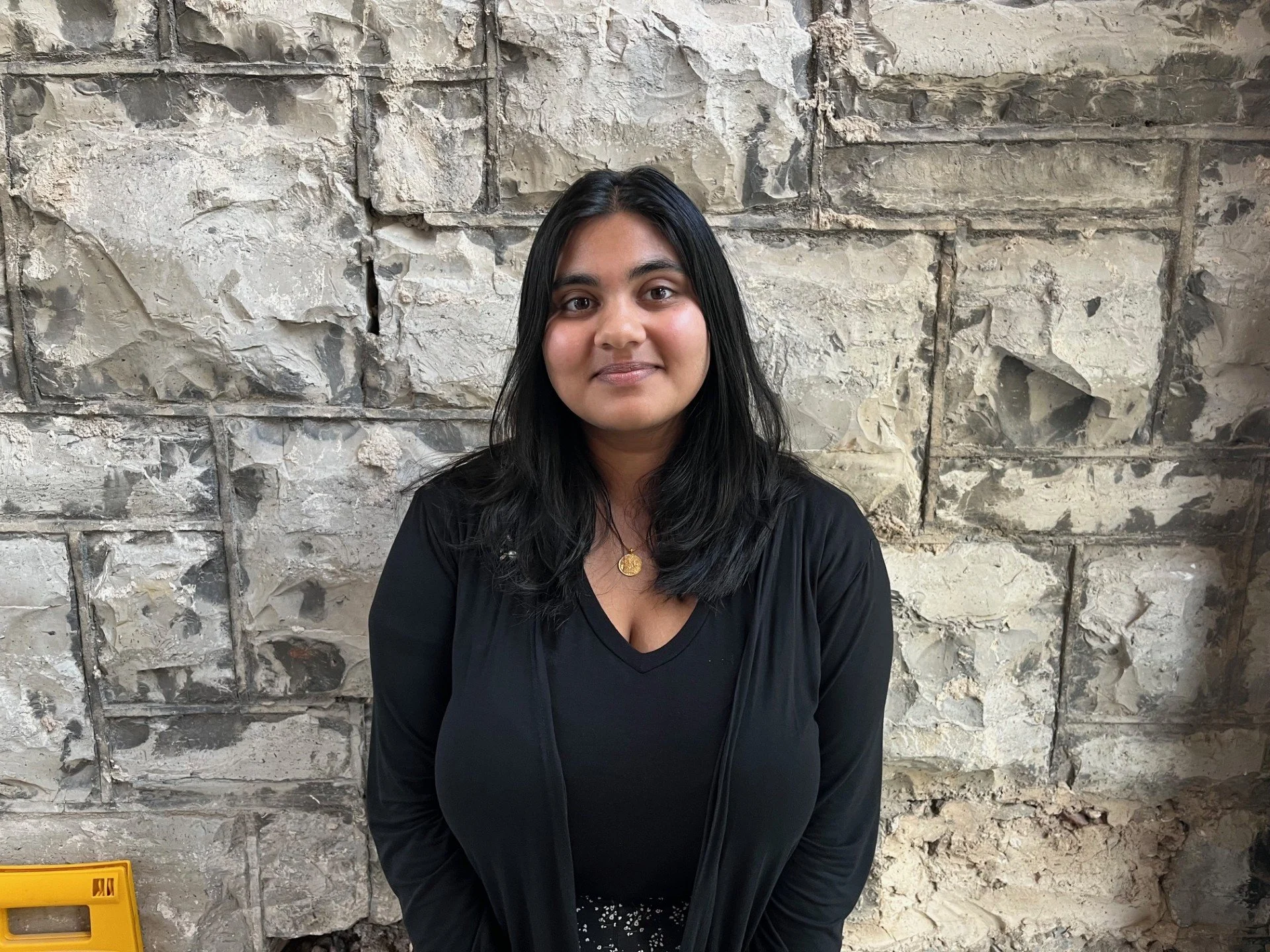
Thinugi is a 4th-year Concurrent Education student studying History and French, and plans on teaching at the high school level. She’s particularly interested in the history of the production of knowledge, but in her free time, she enjoys going for long walks at night, falling down Wikipedia rabbit holes, and embroidering. Thinugi has also previously completed an alternative practicum placement at the Museum and is delighted to be back.