Dr. Dominique Gaspard
For the 30th anniversary of Black History Month, the theme is “Honouring Black Brilliance Across Generations – From Nation Builders to Tomorrow’s Visionaries.” The Canadian Museum of Health Care will be continuing our series of profiles on Black individuals’ and organizations’ contributions to healthcare by highlighting the work of Dr. Dominique Gaspard.
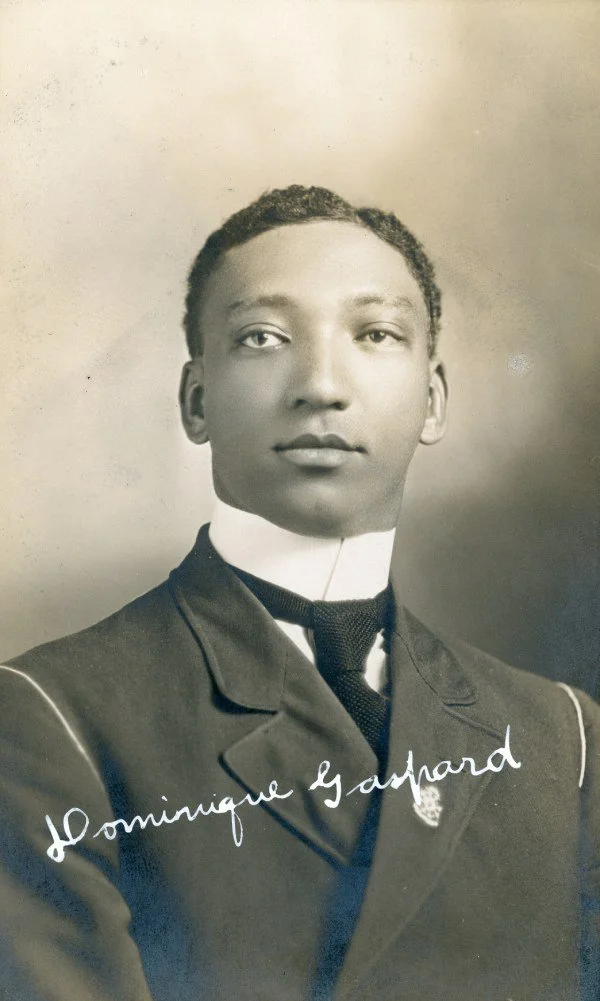
Born in 1884 in New Orleans, Dr. Gaspard decided to enter a Catholic seminary in Saint-Hyacinthe, Québec, in 1904. Back in Louisiana, Gaspard had been a member of a Catholic Parish that was heavily influenced by members of St. Joseph’s Society of the Sacred Hearts, a Catholic society dedicated to serving Black communities. It was at the urging of the Josephites that Gaspard chose to join the seminary at Saint-Hyacinthe in Montréal, which had welcomed Black Americans since the 1860s. Although he had enjoyed a certain level of privilege due to his status as an Afro-French Creole, Dr. Gaspard had experienced the racism that was typical of the Jim Crow period throughout his adolescence. Upon arriving at the seminary, he was surprised yet delighted to find that he was permitted to enter it through the front door, just like his white peers.
After graduating from the seminary in 1911, Dr. Gaspard aspired to become a missionary to the Black community of New Orleans and applied to join the Order of Saint Dominic. The leadership of the seminary considered this to be crossing a line, and they initially reacted to his application with repugnance before eventually deciding that Dr. Gaspard should not be written off immediately due to the colour of his skin. Dr. Gaspard did not record how he felt about the seminary’s reaction, but we do know that he abandoned the path of a missionary for that of a doctor. Dr. Gaspard began his studies at Université Laval de Montréal (now known as the Université de Montréal) in 1912.
The First World War broke out during Dr. Gaspard’s second year of medical school. Like many of his classmates, he volunteered to join the staff of the No. 4 Stationary Hospital in the French town Saint-Cloud in 1915. Because he still lacked a medical degree, there was little that Dr. Gaspard could do at the hospital, so it was decided that he would complete his studies in Montréal before returning to the front. After the war ended, Dr. Gaspard opened a general medical practice in Montréal’s St-Antoine neighbourhood, which was located near the city’s rail lines and the porters who serviced them. As portering was one of the few jobs available to Black men during this era, St-Antoine became the epicentre of Black culture in Montréal. For the rest of his life, Dr. Gaspard was an active advocate for Montréal’s Black community. After joining the Montréal chapter of U.N.I.A., he was a founding member of Montréal’s Negro Community Centre in 1927 and the Coloured War Veterans Legion (renamed the Dr. Gaspard Royal Canadian Legion Branch in his honour), both of which provided the city’s Black residents with spaces where they could congregate during a time when they weren’t always welcome in community spaces.
In 1938, while in the midst of plans to establish a social club for Montréal’s Black residents, Dr. Gaspard died, and so too did the Canadian Brothers’ Social Club. However, Dr. Dominique Gaspard and his tireless service and activism were never forgotten. In 2024, he was designated as a national historic person by the Government of Canada in recognition of his contributions both locally and nationally.
References
https://thecanadianencyclopedia.ca/en/article/dominique-gaspard
https://www.concordia.ca/content/dam/artsci/scpa/quescren/docs/Williams_Paper_final.pdf
https://parks.canada.ca/culture/designation/personnage-person/dominique-francois-gaspard
About the Author
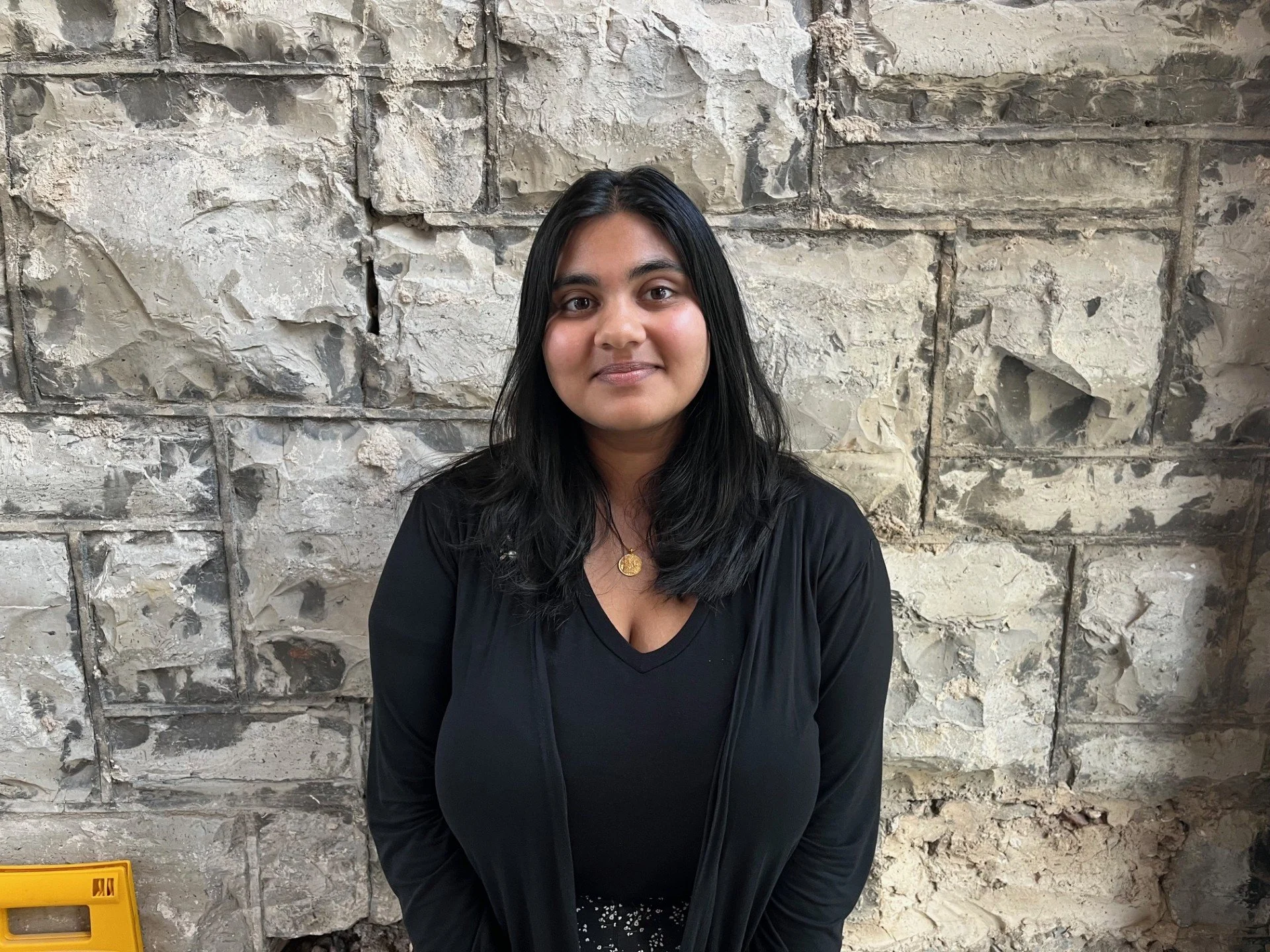
Thinugi Wickramasinghe
Thinugi is a 4th-year Concurrent Education student studying History and French, and plans on teaching at the high school level. She’s particularly interested in the history of the production of knowledge, but in her free time, she enjoys going for long walks at night, falling down Wikipedia rabbit holes, and embroidering. Thinugi has also previously completed an alternative practicum placement at the Museum and is delighted to be back.